
What Is DTF Printing? Pros, Cons, Cost, and Comparison With Other T-Shirt Printing Methods
The personalized t-shirts have never been printed as easily. Regardless of the small business, a hobby, or gifts, there are some alternatives to colorful designs.
Therefore, direct-to-film print is one of such techniques which gradually gain popularity. It is simple, universal and produces quality prints.
Here we are going to talk about all the specifics, advantages, and disadvantages of it, its cost, and how it can be compared to the other ways of printing t-shirts.
What Is DTF Printing?
Direct to Film (DTF) printing refers to a process where a design is first printed on a special film which is then hatched onto a t-shirt. It provides smooth, bright and detailed prints and can be applied on cotton, polyester fabrics and blends. It is flexible and therefore suited to small to medium-sized orders
What is the Process of DTF Printing?
The DTF printing process has a series of steps, which yield long-lasting permanent high-quality designs. In as much as it is a simple process, details should be observed to achieve professional results. DFT Process of printing incorporates:
Print the Design on PET Film
Special inks on a DTF printer are necessary to print precise colors and edges on a high-resolution design on the right side of the PET film.
Apply Powder Adhesive
The wet ink should be covered with adhesive powder everywhere. Use a towel to wipe the powdery excess in order to create a smooth and even adhesion.
Cure the Ink and Powder
Heat the adhesive and ink with a heat press. Always keep the right temperature and time to prevent distortion and poor adhesion.
Transfer to the T-shirt
Put the film in the cloth, heat it and press it. The film is peeled depending on the powder to be used to give smooth and vibrant print.
Final Inspection
Test the sharpness, the color intensity, and adhesion. Wipe off and make sure that the edges are clean and the print comes smooth and tough.
How to Do DTF Printing at Home?
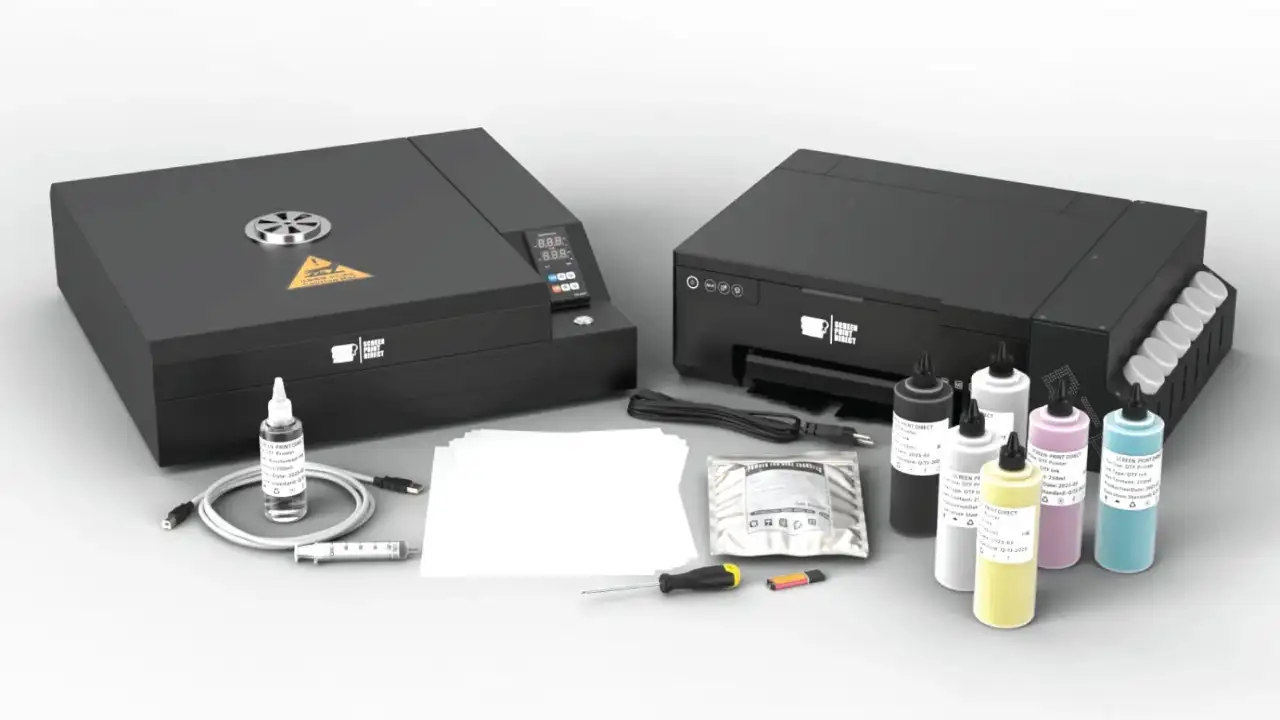
DTF printing at home is a simple and inexpensive method to print custom t-shirts. The procedure to print DTF at home is as follows:
- Set up tools: Small DTF printer, PET films, heat press, inks, and adhesive powder.
- Print design: Print your design on the PET film.
- Apply adhesive powder: Sprinkle evenly over wet ink.
- Fix the design: Use a heat press to set the ink and powder.
- Transfer to t-shirt: Press the film onto the fabric with heat and pressure.
- Check the print: Ensure colors are vibrant and adhesion is smooth.
Understanding the DTF Transfer Process
Transference process of the printed design to t-shirt is referred to as DTF transfer process. To begin with, a heat press fastens the film to the fabric using heat and pressure. This attribute makes this design adhere. This process will therefore ensure that the colours are bright, the pattern is powerful and the garment is smooth. In addition the process of DTF transfer is applicable and good to various fabrics.
What are the Merits and Demerits of DTF Printing?
| Pros | Cons |
| Clear, vivid, high-quality, and well-designed prints. | Initial investment can be high (printer, heat press, materials) |
| Designs for a variety of fabrics, like cotton, polyester, and blends. | Beginners might require practice to achieve optimal outcomes. |
| Strong- prints are not easily peeled, cracked, or faded. | Handling adhesive powders is messy |
| Cost-effective for small batches | Heat may damage delicate fabrics |
What is the Cost of DTF Printing?
The price of DTF printing is up to your setup. Home setups are less expensive, while commercial setups are more costly and can accommodate bigger batches. In general, the cost of DTF printing is low for small quantities with excellent prints. Cost Considerations:
- Home Set-Up: Small printer, heat press, inks, and films could run a few hundred dollars.
- Commercial Setup: Larger printers and equipment are pricier, but they can handle bulk orders.
- Supplies: On the other hand, inks, substrates, and adhesive powders are all consumable expenses.
- Small lots: In spite of the setups, it is still economic to produce small lots.
- ROI: Long-lasting Quality prints make it well worth the investment in the long run.
How Does DTF Printing Compare With Other T-Shirt Printing Methods?
DTF printing provides a compromise between quality, flexibility, and affordability. Relative to other approaches, it is as follows:
- Screen Printing:It works best when printing in large quantities, and it requires a screen.
- Heat Transfer Vinyl: Acceptable for low-volume batches; it peels or cracks.
- Sublimation Printing: This printing is primarily done on polyester; it is done to create bright designs.
- DTF Printing: It works on a wide array of fabrics, is flexible, tough, and made to work with small to medium quantities.
Conclusion
DTF is revolutionizing the printing on t-shirts. It offers colorful, detailed and long lasting designs on a variety of cloths. It is easy to acquire and cheap, whether one is using it in personal activities or businesses. DTF printing provides an opportunity to anyone to make the right t-shirts using the right equipment and practice.
For more informative articles, visit our site daily.