
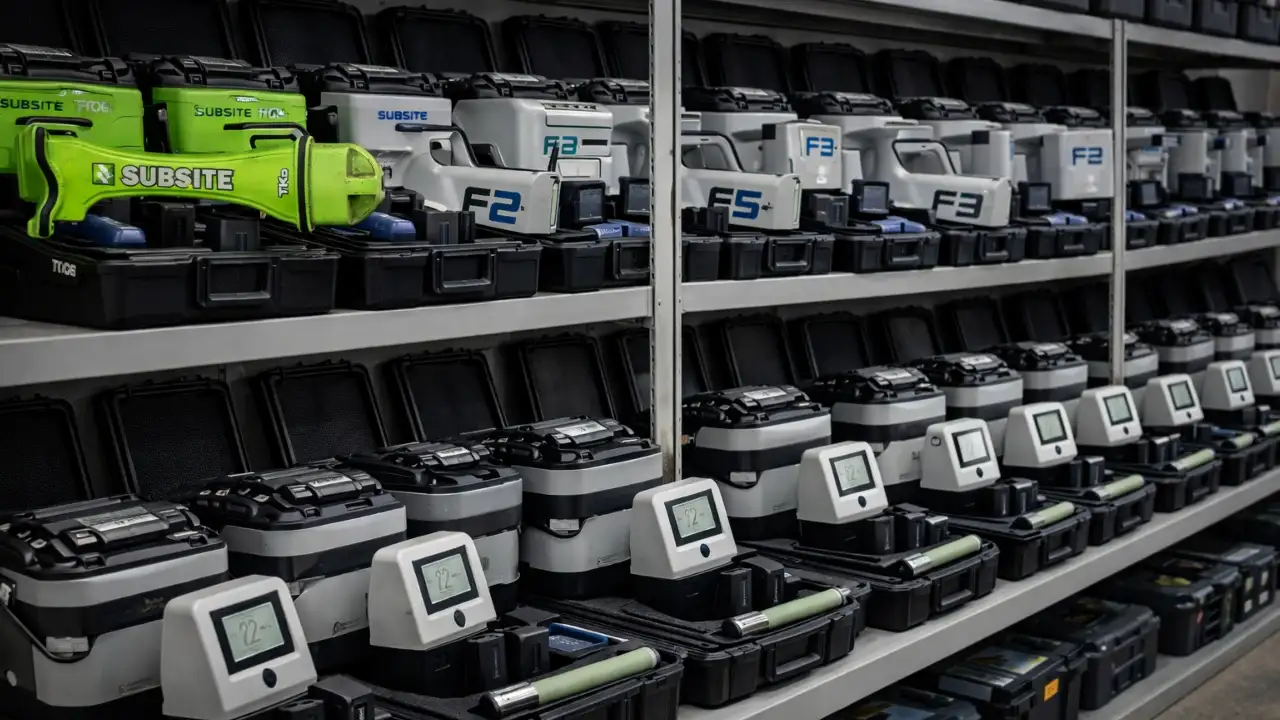
HDD equipment buyers do not buy “tools.” They buy finished bores. They pay for predictable locating, stable guidance, and fewer stuck tools. A missed locate, a dead transmitter, or a failed pullback can erase profit on a job.
This article maps the buyer groups for used and surplus HDD equipment in the US. Each section answers three questions: 1) What job drives the purchase. 2) What buyers check before they pay. 3) What closes a used-equipment deal.
In this article
- How the typical HDD equipment buyer thinks
- Small and mid-size HDD contractors
- Large civil and utility contractors
- Fiber and telecom construction crews
- Gas and water pipeline contractors
- Electric and powerline undergrounding teams
- Municipal and DOT contractors
- Rental houses and dealer networks
- Fleet managers and tool rooms
- Training centers and schools
- Repair shops and parts buyers
How the typical HDD equipment buyer thinks
Most HDD equipment deals close when the seller stops listing items and starts removing risk. A buyer asks one question first: will this gear reduce downtime on a real job? If the answer is unclear, the buyer discounts hard or walks away.
Buyers think in job stages. Planning. Locate and drill. Steer. Ream. Pull back. Restore. Each stage has a failure that costs money. A broken receiver delays the bore. A weak transmitter forces shallow depth or slow speed. A damaged sonde housing risks water ingress. Worn reamers waste hours and can stall the pullback.
Buyers also split roles. A locator or drill operator chooses the tool. A supervisor owns schedule and safety. Procurement approves money. A used deal fails when a seller cannot answer basic equipment questions in the first message.
What buyers ask first
- What exactly is included: make, model, and quantity for each item?
- What job did you use it on: fiber, gas, water, power, road bores?
- What is the condition: working, intermittent, needs repair, parts-only?
- Do you have serial photos and clear photos of wear areas?
- What accessories ship with the unit: batteries, chargers, cases, clamps, adapters?
- Do you have proof it powers on or links: short video or photos of screens?
Two facts that raise your offer
- An inventory list that names every item, not “misc tools”
- Condition proof on critical gear: receiver screen, transmitter ID, battery packs, and cable ends
If you provide those facts, buyers quote faster. They also pay more because you reduce inspection risk.
Small and mid-size HDD contractors
Small and mid-size contractors buy used HDD equipment to expand capacity without new-equipment prices. They often buy a second locating setup, extra transmitters, used tooling, and backup electronics.
What they use HDD equipment for
- Run fiber, gas, water, and power service installs
- Keep a backup locator package for busy weeks
- Replace worn tooling without pausing projects
- Build a second crew package to grow revenue
What they check before they pay
- Electronics health: receiver screen condition and button wear
- Transmitter performance: output, frequency options, and battery runtime
- Compatibility: receiver and transmitters match their fleet
- Tool wear: reamer edges, swivel condition, pull heads, saver subs
- Completeness: cases, chargers, cables, clamps, adapters
What closes the deal
- A clean inventory list with model names and quantities
- Photos that show powered-on screens and transmitter IDs
- Bundle pricing for a full “second crew” package
How to direct your listing
Write as if a foreman reads it on a phone. List the package first. Put condition notes next to each item. Small contractors move fast when the offer looks ready to deploy.
Large civil and utility contractors
Large contractors buy used HDD equipment when they need standardized spares across fleets. They also buy surplus packages during fleet refresh cycles. They care about traceability and compatibility.
What they use HDD equipment for
- Maintain multiple drilling crews across regions
- Keep spare locating gear to avoid downtime
- Stock common tooling and replacement components
- Rotate equipment through tool rooms and maintenance shops
What they check before they pay
- Fleet compatibility: models align with existing training and procedures
- Traceability: serial photos and clear identification
- Service path: repairability and parts availability
- Safety and compliance: intact housings, proper cases, reliable batteries
- Uniformity: consistent kits and accessories across units
What closes the deal
- One message with full inventory and serial photos
- Condition grading: working, needs repair, parts-only
- Clear logistics: pallet packing and shipping readiness
How to direct your listing
Write for a fleet manager. Use a spreadsheet-like inventory format. Large buyers reject vague listings because vague listings create internal approval friction.
Fiber and telecom construction crews
Fiber crews buy HDD equipment to keep telecom builds moving. They drill many short bores. They care about speed, repeatability, and minimal failures in locating and steering.
What they use HDD equipment for
- Install fiber under roads, driveways, and rail crossings
- Run short to mid-length bores with high daily volume
- Maintain spare transmitters and receivers for tight schedules
- Keep tooling ready for different soil and conduit sizes
What they check before they pay
- Locating accuracy: stable signal and predictable depth readings
- Fast workflow: quick setup and clean UI
- Battery readiness: spares and chargers
- Tooling fit: reamers and pull heads match conduit sizes
- Wear and damage: cable ends, housings, and seals
What closes the deal
- A demo that shows stable readings and working controls
- A kit that includes chargers and cases
- Clear notes on what soil and bore types the gear handled
How to direct your listing
Lead with bore type and conduit sizes you supported. Fiber buyers want to know if your kit fits their daily jobs.
Gas and water pipeline contractors
Gas and water crews buy HDD equipment for service installs and small pipeline work. They operate under safety constraints. They value reliable locating and a stable steering workflow because mistakes carry high cost.
What they use HDD equipment for
- Install gas and water services under streets and yards
- Perform repairs and replacements with minimal surface disruption
- Support small-diameter pipeline work and crossings
- Keep backups to avoid downtime in scheduled work windows
What they check before they pay
- Reliability: electronics that do not drop signal mid-bore
- Housing integrity: sealed components and no cracked tubes
- Compatibility with their standard procedures and training
- Tool condition: pull heads, swivels, reamers, and subs
- Documentation readiness: clear identification for internal tracking
What closes the deal
- Evidence of stable operation and intact housings
- Full kit list with safety-critical accessories included
- Clear packing and shipping details to avoid transit damage
How to direct your listing
Use direct language. State condition. State what you include. Utility-adjacent buyers avoid surprise risk.
Electric and powerline undergrounding teams
Undergrounding teams buy HDD gear to route conduit and cable in planned corridors. They work around other utilities. They value accurate locating and durable tooling because jobs often run in hard soils and congested rights-of-way.
What they use HDD equipment for
- Install power conduit and cable under roads and developed areas
- Run bores in congested corridors with high utility density
- Keep spare locating systems to avoid delays
- Stock tooling for rocky soil and long pullbacks
What they check before they pay
- Accuracy and stability: predictable locating under interference
- Tool durability: reamers, subs, and swivels show controlled wear
- Electronics readiness: receiver brightness, button health, stable link
- Accessory completeness: clamps, chargers, extra batteries, cases
- History: what conditions the gear saw (rock, clay, mixed soil)
What closes the deal
- Clear photos of wear areas on tooling plus electronics proof
- An inventory list that separates electronics from tooling
- Bundled pallet shipping that keeps kits intact
How to direct your listing
Separate your listing into electronics and tooling. Undergrounding buyers build packages by category and approve faster when the list is clean.
Municipal and DOT contractors
Municipal and DOT contractors buy HDD equipment for crossings and infrastructure work under public oversight. They need predictable performance and clean tracking for job records.
What they use HDD equipment for
- Road and trail crossings for utilities and drainage
- Conduit installs under public corridors
- Maintenance and repairs that minimize surface restoration
- Contract work where delays trigger penalties
What they check before they pay
- Reliability and condition proof
- Inventory completeness for job readiness
- Traceability: serial IDs for internal asset control
- Packing and logistics: pallet readiness and protection
- Compatibility with their contracted methods and training
What closes the deal
- A complete inventory plus condition grading per item
- Clear logistics plan and pickup/shipping coordination
- Evidence that electronics work and tooling is serviceable
How to direct your listing
Write for a PM who reports up. Provide a simple inventory and condition grade. Avoid vague labels like “good shape.” Use photos instead.
Rental houses and dealer networks
Rental houses buy HDD equipment that survives repeat handling, shipping, and varied user skill levels. Dealers buy to refurbish and resell. Both groups price risk hard.
What they use HDD equipment for
- Build rentable locator kits and transmitter packages
- Refurbish used gear and resell to contractors
- Supply tooling bundles by soil type and conduit size
- Stock spares for peak seasons
What they check before they pay
- Durability: cases, latches, cables, connectors, handles
- Completeness: missing chargers or cases reduce value fast
- Serviceability: parts availability and repair path
- Standardization: models that match what customers request
- Shipping safety: can the seller pack properly
What closes the deal
- One message with inventory, serials, and photos
- Short videos of electronics powering on and linking
- Clear statement of what is repair-needed vs ready-to-rent
How to direct your listing
Rental and dealer buyers choose speed. Make your listing easy to quote. Put inventory and condition at the top.
Fleet managers and tool rooms
Fleet managers buy used HDD equipment to fill gaps during expansions, crew growth, or seasonal demand. They care about uniform kits, tracking, and predictable maintenance.
What they use HDD equipment for
- Keep spare locating gear to reduce downtime
- Build standardized kits for new crews
- Replace worn tooling across crews
- Maintain tool-room inventory for quick dispatch
What they check before they pay
- Asset tracking: serial photos and readable labels
- Compatibility with existing fleet models
- Maintenance history if available
- Condition grading per item
- Packaging: cases and organized accessories
What closes the deal
- A spreadsheet-style inventory with serials and condition
- Photos that show each kit laid out
- Clear shipping plan for multi-item lots
How to direct your listing
If you sell a lot, structure it like a tool-room audit. Inventory line by line. Photo set by kit. Fleet buyers approve faster when the listing looks controlled.
Training centers and schools
Training programs buy HDD equipment for demos, practice rigs, and basic locating education. They can take older models when the equipment still works and includes accessories.
What they use HDD equipment for
- Teach locating basics and steering concepts
- Run practice drills on short bores
- Maintain training rigs and demo stations
- Stock backup units for class continuity
What they check before they pay
- Safety and usability: clear screens and working controls
- Accessory completeness for teaching workflows
- Durability under repeated handling
- Clear disclosure of limits and missing parts
What closes the deal
- Honest condition statement and full photo set
- Bundled kits that cover a full training station
- Simple shipping and pickup coordination
How to direct your listing
If a unit is older but functional, position it as a training kit. Training buyers still need chargers, cases, and working controls.
Repair shops and parts buyers
Repair shops buy HDD electronics and tooling when they can salvage parts or rebuild units. They price unknown condition low. They pay more when you provide clear symptoms and photos.
What they use HDD equipment for
- Harvest parts from receivers, transmitters, batteries, and cables
- Rebuild kits for resale or internal use
- Repair known issues and return units to service
- Stock donor parts for common failures
What they check before they pay
- Failure symptoms: dead, intermittent, battery faults, screen issues
- Physical damage: cracked housings, bent connectors, damaged cable ends
- Completeness: chargers, cases, and adapters
- Serial plates for tracking
- Signs of water exposure or corrosion
What closes the deal
- Short symptom description plus photo evidence
- Clear separation of working vs needs-repair items in the inventory
- No surprise missing parts after arrival
How to direct your listing
State symptoms. Do not diagnose. Repair buyers pay for evidence and predictable labor. A clean list speeds quotes.
If you want a fast quote for your used, surplus, or non-working kits, send an inventory list and photos through this page: Sell HDD equipment.
For more informative articles, visit our site daily.
Thanks